
Senator Steve Urquhart
To listen to Senators Jim Dabakis or Steve Urquhart, at least through the lens of the Salt Lake Tribune, you would think that Assistant Attorney General Gene Schaerr, hired just for the purpose of running the Amendment 3 case, had single-handedly killed SB100 by advising legislators not to pass it.
[Sen.] Jim Dabakis and Sen. Steve Urquhart, R-St. George, met with Attorney General Sean Reyes Tuesday night to voice concerns about Schaerr’s role in defeating SB100, the non-discrimination bill that Urquhart sponsored.
Legislative leaders said that Schaerr, in closed-door meetings with Republicans in the House and Senate, suggested that they not consider any bills related to LGBT issues this session out of fear that it could show “animus” that might harm the state’s defense of its gay-marriage ban.
It’s hard to point the finger any more directly at the Utah AG’s office.
On the contrary, say several legislators. The Utah AG did not suggest that SB100 not get a hearing or be passed.
According to several legislators, all confident in their assertions on the meeting, neither Schaerr nor Utah Attorney General Reyes asked them not to pass the bill. In fact, I’ve yet to talk to a legislator who will blame Schaerr or Reyes, but rather all have repeatedly said that the Salt Lake Tribune’s description isn’t accurate.
It makes for good controversy, though, and provides a scapegoat outside of the legislative body. Dabakis and Urquhart can blame the AG without offending their fellow legislators, whose votes they will need if their currently dead bill is resurrected this session.
It’s always possible that Schaerr was referring to other bills, such as a RFRA-type bill suggested by Senator Stuart Reid before the session, and not SB100.

Senator Jim Dabakis
But perhaps there’s more at play, and too conveniently Reyes and Schaer have been blamed.
Reyes is unlikely to dispute or contradict reports in the press about what was said in closed meetings of the Republican caucus. It would break the confidentiality of the meeting, offend members of the majority Republican caucus, and create a confrontation with the state’s policy making body.
And, frankly, it’s just not Reyes’ style to either push his own policy preference in the legislature, or even allow Schaerr to do so, either.
But if Reyes and Schaerr didn’t advise that the bill be stopped, who did?
A closer look might show that there are plenty of legislators in the body who are disinclined to pass SB100, which they see as a restraint on private property. But pointing the finger at them, as Dabakis and Urquhart have not done, would make passage of the law more difficult.
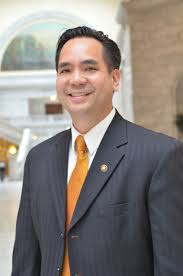
Sean Reyes, Utah Attorney General
It also makes it easy for presumed Democratic challenger to Sean Reyes–if not this year, then in 2016–Sim Gill to post an op-ed piece placing him on the other side of the issue from Reyes. “Reyes shut down anti-discrimination,” he says when he runs for the Utah Attorney General spot, while Gill was out in favor of it.
Unfortunately for Gill, and contrary to what is in the press, it appears that may be less than an accurate rendition of events. When we are looking at this session two years in the rear view mirror, will that be clear? Or will it be another piece in the Democrats strategy to tear down Reyes’ reelection?
Related articles
- Gene Schaerr Leads the Utah Appeal of Kitchen v. Herbert (publiusonline.com)
- Anti-discrimination bill on hold in Utah (4utah.com)
- Thoughts on SB100 and Amendment 3: Delayed Debate, Subordination, and Separation of Powers (utahpoliticohub.com)
- Schaerr Leaves Winston to Represent Utah in Marriage Case (legaltimes.typepad.com)
- Departure Gospel Of The Day (abovethelaw.com)


 About Daniel Burton


 RSS - Posts
Gill will be a formidable challenger to Reyes and would be a good AG. But, I think Reyes has already shown that he can quietly sidestep the hottest of issues.
Two years from now, it will be an individually nameless legislature, not Reyes, blamed for holding up the bill.
Perhaps, but I’m a bit dubious. I doesn’t hurt the legislature to take the blame, and there isn’t really a Democrat who can run against the legislature for it in the state, but it does make a great attack on an individual during a campaign, and I think that’s the more likely scenario.
Dan, you can refer to the numerous on-the-record comments by leadership in both chambers who have said they are deferring action on SB100 and the Reid/Anderegg and other bills because of the advice they were given in the meetings with Reyes and Schaerr. You can pretty much watch any of the House or Senate media availabilities during the first week or two of the session and they will all say the same thing. In fact, every legislator I’ve talked to has given basically the same account.
However, nobody ever said Schaerr was hired to kill SB100. I think that’s probably an distortion of what is written. Senators Dabakis and Urquhart have raised the question of whether or not Schaerr has given the state sound legal advice on SB100, noting he has an arrangement to be paid by Sutherland Institute, which opposes the bill. Readers will have to draw their own conclusions.
I asked the AG’s office and Sean specifically if he wanted to address any of these issues and all I got was a statement that Gene isn’t currently being paid by Sutherland. (He won’t be until next month). If anyone would like to clarify any of the issues, I’m easy enough to find.
I think you’ve got a lot of accurate comments there, but I was precise in what I said did not happen: Reyes and Schaerr did not suggest that SB100 not be passed. I did not ask about other bills, and no one has indicated to me whether those other bills were what brought down SB100. They have said that SB100 did not die due to Schaerr and Reyes advice.
You are correct: no one has said Schaerr was hired to kill SB100. HOWEVER: you have a paragraph in your piece that cites that Dabakis and Urquhart went to Reyes’ office to “discuss Schaerr’s role in defeating SB100.” This shows a presumption that the Assistant AG had a role in killing it, which my sources tell me is inaccurate.
It is compounded in the next paragraph where you state legislative leaders had said that Schaerr advised not to pass any bills on “LGBT issues this session out of fear that it could show “animus” that might harm the state’s defense of its gay-marriage ban.” However, the sentence is to vague as to which bills he was talking about as to leave it unclear whether he wanted them to pass a non-discrimination bill that would have done anything but show animus. And, according to my sources, SB100 was not one of the bills that Schaerr spoke to on this front.
Regarding Sutherland: I am not saying one thing or another. I draw no conclusions about his relationship there. There are multiple ways for Sutherland to kill SB100 without there using Schaerr or having a quid pro quo relationship with him. However, there is strong evidence that the bill was killed due to other efforts than the AG and Schaerr.