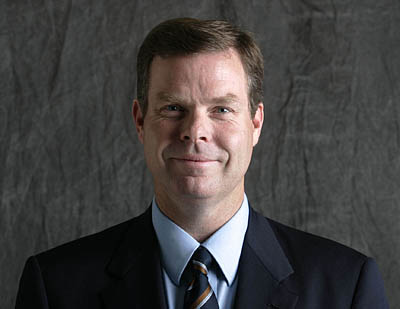
While Utah Attorney General John Swallow may get off for the questionable behavior that helped him win elections, a cover up may be more difficult to dodge. And the House subpoenas into a bevy of shadowy organizations and political operatives, such as Jason Powers, may be aimed at just that.
It wasn’t the Watergate break-in that took down President Richard Nixon. It was the cover-up.
And it wasn’t Bill Clinton’s Oval Office promiscuity that got him in trouble, but that he lied under oath. Whether in the case of the Teapot Dome Scandal, the more recent Fleet Street Phone Hacking, and or the hideous hiding of pedophile priests by the Catholic Church, it is the cover up that brought down powerful individuals who thought that they were above the law.
And yet, cover ups tend to fail. Eventually the prosecutor–and the law–catches up to the malefactor, and not in spite of the cover up, but often because of it.
With evidence emerging last week that entire years of Utah Attorney General John Swallow’s emails are gone, his calendar scrubbed of events, and his personal hard drive mysteriously dead–all covering same time period–a cover up could be the knot in the rope that finally hangs Swallow.
It has all added up for Swallow to, as Holly Richardson astutely called it, a “terrible, horrible, no good, very bad week.” Perhaps the worst since he took office.
 Then, on Friday night, as columnists, bloggers, and Utah’s political beat reporters prepared to pontificate on Swallow’s continuing woes, the House Special Investigation Committee fired off nine more subpoenas, delving into Swallow’s closest political operatives and operations.

Most notably, the subpoenas look into Jason Powers, whose rise as a prominent political consultant has largely followed Swallow’s political career.
Few people know Swallow’s political history as well as Powers. Working with Swallow since his first campaign for Congress, Powers has come to be known for his ability to use data to help his clients determine exactly where, and upon what issues, they should campaign. Approaching campaigns with a deep level of data analysis, Powers sends out targeted mailers in his clients’ districts, smearing their opponents with half-truths and inflammatory rhetoric and images.
Just ask Brad Daw, a conservative former legislator from Utah County.
Daw was, strangely, accused of supporting Obamacare in a mailer that cut and paste Daw’s face to stand alongside President Obama’s. The mailer was also sent to every member of the legislature, where it was condemned by Speaker Becky Lockhart as “very negative” and was viewed by several lawmakers as a threat to not oppose the payday industry. It was seen as retaliation by payday lenders for consumer friendly regulations Daw had supported and was so egregious that the legislature passed a law tightening reporting requirements on organizations like Powers’.

In other words, Powers is not a guy who has a problem threatening lawmakers, or taking them down.
It isn’t very different from mailers that Powers sent on behalf of Swallow’s campaigns against his Republican opponents over the last decade, when Swallow accused them of supporting abortion, obtaining support from Democrats, and intentionally flaunting campaign laws. If anything, the highly suspect nature of Powers produced mailers for Swallow is at the root of the divide in the Utah Republican Party that allowed Democrat Jim Matheson to win a decade of campaigns to represent Utah in Congress.
Powers has always been most effective against Republicans, not Democrats, using his skills to smear Swallow’s Republican Party opponents to win Primary vote nominations.
And now the House is digging into how Powers has used his skills, perhaps illegally, in support of the questionable activities that Swallow has been accused of.
With any luck, the information found by the subpoenas–assuming it hasn’t been “accidentally” deleted–will tell House Special Investigator Steven Reich a useful story that can bring Utah to an end of this depressing chapter.
Instead of distorting the truth about Swallow’s political opponents, as Powers and the various organizations have done over the years, perhaps it will show us why Swallow’s electronic data has so mysteriously disappeared, been “lost in transition,” or accidentally deleted.
In the end, whatever the subpoenas uncover, it is the cover up that could be the most damaging to Swallow, as well as anyone who has assisted him. Destruction of evidence during an investigation violates not only the spirit, but the letter of the law, and is a violation of the oath that Swallow took upon taking office. If evidence of malfeasance has been destroyed, the destruction could end up being the very thing that brings down Utah’s scandal plagued attorney general.
List and links to the subpoenas issued by the Utah House Special Investigation Committee:
- Guidant Strategies (Nov. 8, 2013)
- Office of the Attorney General (Nov. 8, 2013)
- Jason Powers (Nov. 8, 2013)
- Proper Role of Government Action Fund (Nov. 8, 2013)
- Proper Role of Government Defense Fund (Nov. 8, 2013)
- Proper Role of Government Education Association (Nov. 8, 2013)
- Protect Utah PAC (Nov. 8, 2013)
- State Travel Office (Nov. 8, 2013)
- Utahs Prosperity Foundation (Nov. 8, 2013)
Related articles
- 9 new subpoenas issued in Swallow investigation (ksl.com)
- John Swallow and his terrible, horrible, no good, very bad week. (hollyonthehill.com)
- John Swallow’s Lost Data (utahpoliticalsummary.com)
- Angry and defiant, John Swallow attacks House investigator (hollyonthehill.com)
- John Swallow’s wife knows it’s over; he fights on for the “good of the state” (hollyonthehill.com)
- AG John Swallow and the plethora of missing records (hollyonthehill.com)


 About Daniel Burton


 RSS - Posts
[…] If the Crime Doesn’t Fit, Perhaps the Cover Up Will (publiusonline.com) […]